The ‘Crash Bandicoot N. Sane Trilogy’ was released in 2017 around the time that this site shut down, so I didn’t get the chance to share my thoughts on it. Which I am going to do now, because I don’t care whether it’s old news or not. I want to talk about it and maybe somebody wants to read about it some more.

What they got right
I’m going to start with the positives as there are plenty of them and it deserves praise, but the negatives are actually quite a big deal, so I’ll save them for last.
Graphics
I won’t spend long on this, you can use your eyes. Quite often when animated characters are updated, they can lose their charm or simply not look like original version of the character. Examples I can think of are Hunter in ‘Spyro Re-ingnited’ and Largo LaGrande in ‘Monkey Island 2: LeChuck’s Revenge – Special Edition‘.
But the Crash cast look great. I don’t think there are any to complain about. The same goes for the level designs. They have been given new vibrant life while maintaining the feel of the originals. Less PS1 blockiness for the cartoony softness that was more like the original vision.


Save Files
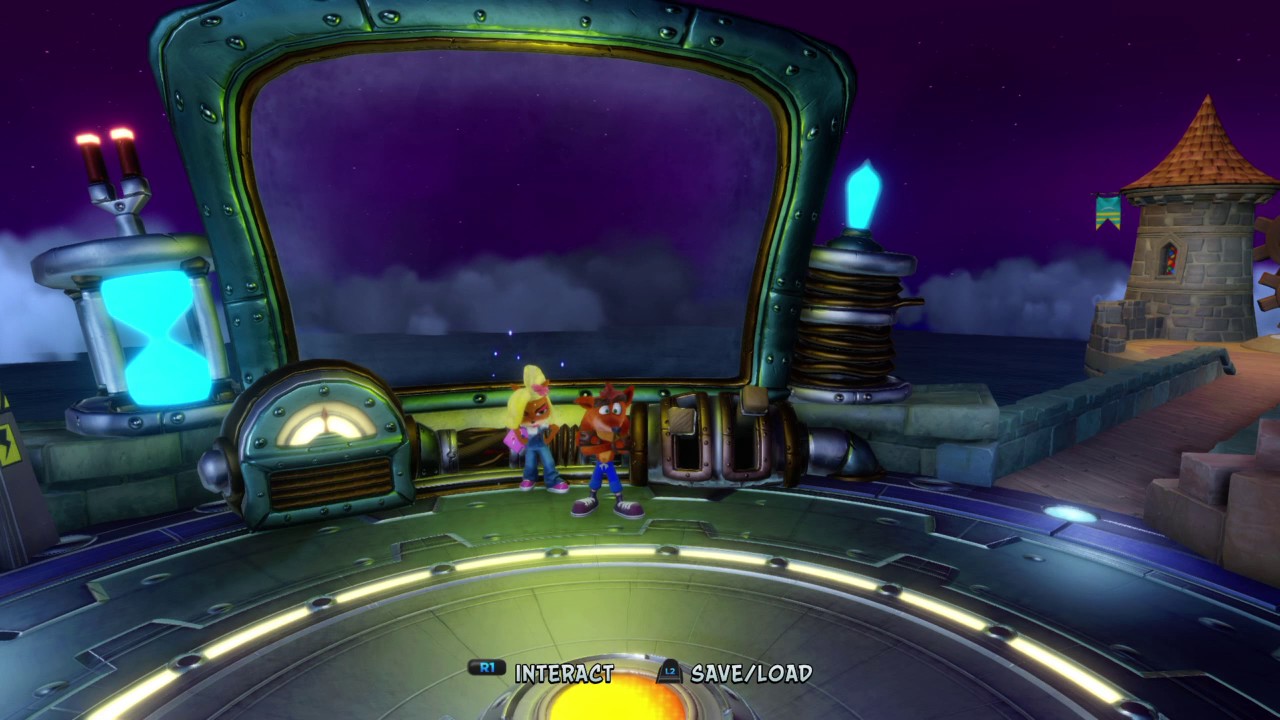
This wasn’t a problem in Crash 2 and 3, but the original PS1 Crash Bandicoot had one of the worst save systems ever devised. The remake has solved this by letting players save whenever they leave a level. It uses an autosave system rather than the save screen set up in the warp rooms, but functions in much the same way. The Warp Room Save screens in Crash 2 and Warped were absolutely fine, but the first game was a nightmare. You could only save your game when collecting a gem, a key, or completing a bonus level. You also only got one chance to beat the bonus levels. So if you complete several levels without ever doing any of those things, you could not save your game. But it was even worse than that! Gems and keys would only save the fact that you collected those items. They did not save level progress. So you could have a save file with gems from levels that were not unlocked. But even worse than that! Some levels had no bonus stage, and many levels had gems which could not be collected without first getting a coloured gem from a later level. Gems could only be collected by breaking every crate without losing a life, which is not an easy task, and the coloured gems were on the toughest levels! They did give players level passwords so that you could unlock them if you had the code, but that is much less convenient than simply having the file ready to go. Apparently this decision was made as Crash was one of the earliest games on the PS1 console and at the time developers were working on the assumption that not many users would bother buying memory cards.

Tawna’s Bonus Stages
In the PS1 version, in Tawna’s appearances in her bonus stages, she stood by the exit and posed seductively to celebrate Crash’s success. But this was always odd as the story of the game was that Crash was on an adventure to rescue her. Why was she freely stood around in random tree branches? Was this another Elaine Marley situation where the bumbling hero need not have bothered because the ‘damsel in distress’ was fully capable of saving herself? The original Crash Bandicoot has been praised for telling a story using visuals rather than cutscenes and dialogue. E.g. The way his journey begins in nature and gradually his surroundings becomes more industrial as he approaches Cortex Castle. Perhaps the whole time Crash was jumping, spinning, fighting, running, and collecting treasure, he could have been laid on the beach while Tawna had long since escaped. Maybe that was a subtle joke.
But the N. Sane version makes it clearer. Tawna is there to tease Crash, and Cortex wickedly snatches her away from him as he thinks he might have reunited with his love.
But now I’ve thought it through a bit, I think I might actually like my theory better and maybe this wasn’t the best change after all…
Crash 1 Bonuses and Collectibles
Following on somewhat from the previous points, other improvements were made for the collectathon.
As well as allowing players to save progress outside of the bonus levels, they also made the bonus levels replayable. In the PS1 version Crash would immediately teleport to the bonus stage as soon as he collected three matching character tokens, either of Tawna, Brio, or Cortex. In the remake, the third token instead unlocks a bonus platform that functions exactly like those seen in ‘Cortex Strike Back’ and ‘Warped’. It allows the player to choose when they enter the stage and to retry it if they fail.
The bonus level boxes now count towards level completion as they do in Crash 2 and 3, keeping things uniform. This perhaps adds an extra challenge to collecting gems, but it is more than balanced out by another important difference. Again, keeping the rules uniform across the trilogy, Crash 1 changed how gems are obtained. In the PS1 version gems were earned by completing levels while collecting every box and not losing any lives. This rule was scrapped for all except the coloured gems, which tend to be on the more challenging stages.
Little Tweaks


I could have made this into several subsections, but because they are all quite brief notes I’m bundling them together. Even though they take a moment to mention, they very much deserve to be mentioned.
Gem platforms are unlocked in the game by collecting appropriate gems. In the PS1 original, the gem platforms looked just like the gems. The N. Sane remaster revamps them as actual platforms so they look more like something that is safe to jump onto and not another collectible.
During the boss fight against Nitrus Brio, he releases blob monsters to attack Crash. In the PS1 version, beating the blobs knocks points off of Brio’s health bar. The updated version makes this make sense as the blobs spray him with goo when jumped onto.
The original Crash on PS1 included bounce boxes, just as every game since, however Crash was able to bounce on them 10 times each. This was reduced to 5 in later games, as the higher number slows the flow far too much. The N. Sane trilogy has all three games uniformly use 5 bounces.
What they got wrong
This is rough, as in many ways I think the remaster is the best way to play the game. However, there are a number of issues with it that almost spoil the experience. I know many have 100% completed the set and there is a sizeable speedrunning community, so some of my issues probably are minor to many, but I do think they are worth commenting on.
Remastered control system
This may be the biggest issue fans have with the game, particularly those who came to the remaster after playing the originals.
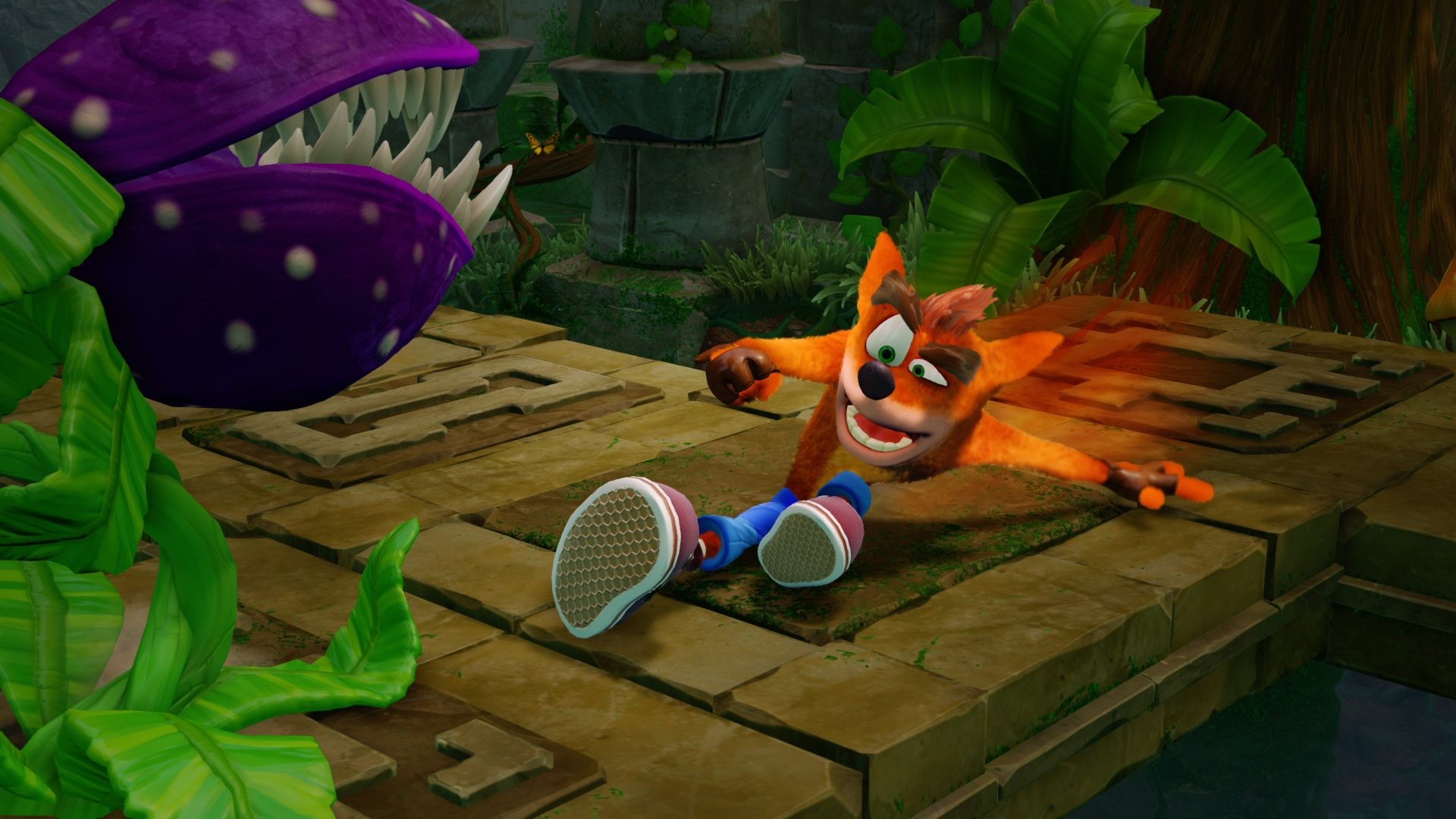
In the positive section I mentioned a few places where the developers ensured all three games worked in a uniform way. As a package, it made sense for all three to have the same rules. This led to several great changes, but the worst one may be the biggest.
In the PS1 games, Crash handled slightly differently in all three titles, so the makers of N. Sane trilogy had to decide how to balance that. The original Crash game had something of a symettrical jump, while ‘Cortex Strikes Back’ gave him more height and a faster fall. Crash Warped tried to balance both, and so this system was retained and applied to the N. Sane Trilogy.
The handling becomes an issue as you play a faithful recreation of Crash 1 and 2 using the physics of Crash 3. Some jumps and obstacles became more challenging as a result.
This was not helped as the stylised platforms are sometimes more slippery than their blocky PS1 counterparts. Slippery scenery, odd hitboxes, and crowbarred in physics changed the feel of the games and made some of the platforming more difficult.

This was particularly notable in the broken bridge levels where Crash must bounce from turtles to clear large gaps. Careful placement and precise jumps are more necessary than they ever were in the original.
Oddly however, in other places, the hitboxes do Crash great favours, for example the incredibly generous vultures outside Cortex Castle.
Perhaps it is harsh to count this a failure. Considering they needed to make the game physics match across the trilogy, there was probably no better way of doing it.
Required Familiarity with the PS1 originals
The trilogy should be completely accessible to a new player. However, there are a few issues with the game that seem to assume everyone already has played the releases from decades before. Granted, a vast number of fans would be returning for nostalgic reasons, but they could well want to introduce their children to the new improved game from their childhood.

A standout example is that Uka Uka appears as the Game Over screen in all three games. Yet, the character is not introduced until the 3rd instalment. New players will have no idea who this evil mask is until they reach Warped. Worse, Uka Uka was imprisoned until he was accidentally freed in that game, so he should not even be free to taunt Crash in the earlier games.
Another similar problem with Coco overlaps with my next issue with the game, so I will cover it there.
Playable Coco
Coco should not have been playable in Crash 1 and 2. Or at the very least, it should have been done very differently. Hear me out.

Crash’s origin was that he was being genetically modified to become the general of Cortex’ army. He was a failed experiment. They had given him physical abilities but when they tried to brainwash him, it didn’t take and he escaped… perhaps because he was too crazy to control.
Coco first appears in Crash 2 and is shown to be highly intelligent and good with tech. She isn’t playable until Crash 3 in which she is always in a vehicle or riding on Pura the tiger. The only time we play her on foot is just before she mounts Pura. She moves at a walking pace, but seems to jump higher than Crash’s base jump. We get a sense that her strengths are very different to Crash’s spins and physical abilities. This carries through to the original Crash Bandicoot 4, ‘Wrath of Cortex’, where Coco is playable in some platforming levels. She has a less lethal attack and does not inherit Crash’s special moves. So her genetic alterations gave her some physical strength, but not as much as Crash. So all through this, we see that Crash and Coco make a great team. He is brawn, she is brain. They have very different personalities and skills. They complement each other.
But N. Sane Trilogy essentially made her a skin swap for Crash. She is no longer unique. Yet, the story demands she is still the smart one.
So then why was she not chosen to be Cortex’ general? She has all of Crash’s skills and is super smart. She is overall BETTER than Crash. And she must have been modified before him as she probably would have been rescued from Cortex Castle at the end of Crash 1, if she was not free before then. Her intellect might not have broken the Cortex Vortex and she would have become a powerful villain.
The other issue is that Coco popping up as playable in Crash 1 and 2 is explained by Crash 3. This assumes players are familiar with the trilogy already. It would be confusing to expect someone new to the series to understand a plot point from the third instalment! Especially one about time travel. So her being playable should at least be unlocked by the player beginning Crash 3. You could even just play the opening cutscene and that would unlock her. All would be clear.

But I still maintain playable Coco should control as she does in Wrath of Cortex, making her a different experience for the player. Now, if players want a female equivalent to Crash with the same moveset, there is one ready to go! Tawna was set up as the backup plan if Crash failed the Cortex experiment. In the very first cutscene Cortex orders his assistants to prepare her for the Vortex. On completing Crash 1, Tawna could have become playable and had the same moves as Crash and that would have been totally on theme. The N. Sane Trilogy cutscene even has her defend herself, while the original simply had her being held captive. Her fighting back makes sense if she is intended to be a warlord and not just a pretty face. She fits the role far better than intelligent little sister Coco.
So ideally players should complete Crash 1 as Crash. They only need to defeat Cortex and that would make Tawna playable. Alternatively and/or in addition, playing the opening cutscene to ‘Warped’ would unlock playable Coco who can be summoned in exactly the same way as she is, just with a different moveset, better suited to her character.
Crash Warped Opening Cutscene

On the topic of the beginning of Warped, there was another huge character problem. Go and watch the original PS1 version and then the N. Sane version of the scene where Uka Uka gives Cortex his orders. In the PS1 version you will see a tense, dramatic, even frightening introduction to a new enemy that has the magical powers of the mask that protects you but dedicated to evil. You learn that the big bad you have been up against for two games actually has a boss who is far worse than him. It is a marvellous introduction to a looming and mysterious foe who will haunt your journey, topped off by the dramatic introduction to another scientist who is at least Cortex’ equal if not superior.
The remaster makes Uka Uka far too cartoony, removes the fear factor, and N. Tropy’s introduction from the shadow is completely dropped. It is just objectively worse.
Though it is particularly bad in this scene, and essentially ruining a character, many have said that similar can be said in general for the remakes versus the PS1 originals. The dark, edgy atmosphere has been replaced with soft goofiness. Yes, the games take a lot of inspiration from Looney Tunes, but they are still allowed to have moments of tension.
Cortex Strikes Back Cutscenes

If any scenes needed changing it would be the holographic appearances of Cortex in Crash 2. The ones we have are fine, but many fans missed what was going on in the plot. Most players probably enjoyed the game too much to actually care, but some clarity may have helped.
The confusion stems from the boss battles. Cortex has Crash working for him to collect power crystals and deliver them to him. But every so often you fight a boss. Why would Cortex send minions to kill Crash when he was working for him? It doesn’t make sense and the explanation is not that clear.
Ripper Roo, Tiny Tiger, and the Komodo Brothers were sent by Brio. The original instruction manual explained that Cortex had double crossed him and replaced him with N. Gin, so he now wanted to stop him as revenge. N. Gin however is just a mix up between Crash and Gin. Crash was meant to give the crystals to N.Gin to pass on to Cortex. However Gin decided to take them by force. Or perhaps Crash had figured out that Cortex was still evil at this point.
Anyway, some clarity on what was going on, particularly as details were lost in the non-existent instruction book, would be helpful.
Relics in Crash 1 and 2
I’m putting this here as a criticism, but I should note that many players love them, and seeing as they are entirely optional, I actually don’t have a problem with them. They serve as an extra challenge for those who enjoy them, but do not count towards completion for casual players or purists.
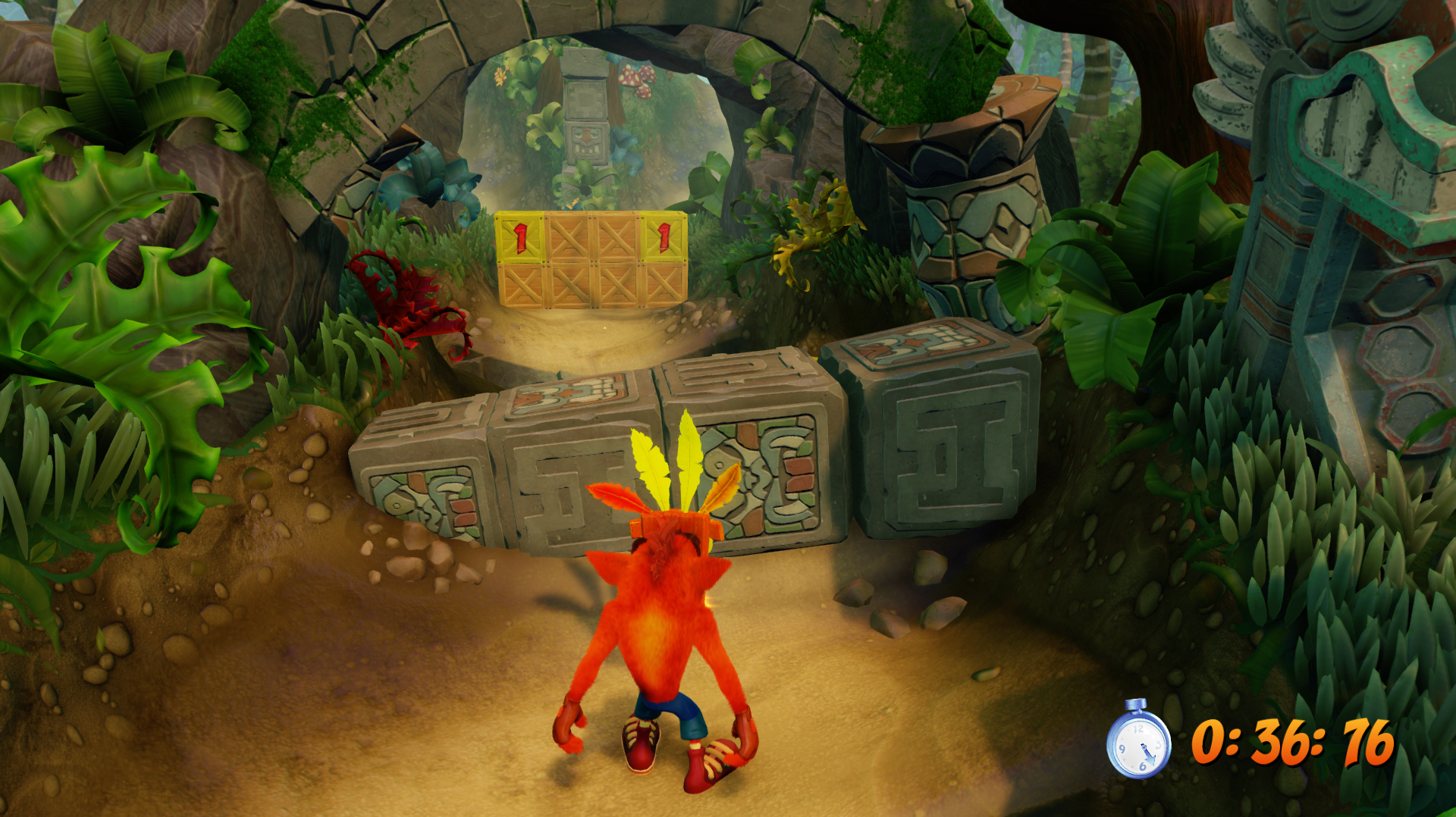
My issues with relics in Crash 1 and 2 are a combination of two previous points. They are introduced in Crash 3: a game themed around time and time travel. They fit and make sense. But for them to appear in the earlier games is odd like seeing Uka Uka and the Time Twister. It’s not quite as bad to be fair because it’s not a plot point.
Really, the biggest problem is that Crash 3 was originally made with the time trials in mind. Crash 1 and 2 were not. There are places in those games that reward patience and finding your moment. The time trials they have crowbarred in place seem to be more forgiving and keep this in mind, so again, they have done the best they can with it.
Tweaks they should have made
I am in two minds about this first one. I think if they had made this change, it would upset a lot of players for not being faithful to the original. However it is another idea introduced in Crash 1 that was tweaked for later games and made better.
There are two levels that take place in the dark. Crash must summon Aku Aku to light his way. If he gets hit, Aku Aku vanishes just as he would in any other stage in which he protects Crash.
In Crash 2, Aku Aku was replaced by fireflies in darkness levels. They stay for a limited time so Crash has to move with some urgency, but if he loses a protective Aku Aku, he can still see his way.
So I wonder if either some similar system should have been inserted into Crash 1, or if Aku Aku should still be able to light up in the other games.
Like I said, this may be best left alone as it is a big gameplay change.
Something that should have definitely been done though is to add attack animations to certain enemies. Some have them, like the pirahna plants and two headed giants. But it has always been odd that simply bumping into a skunk or seal means death. They should have some kind of bite or swipe, just so it looks like they did something. Functionally they would work exactly the same way, but visually it would be more satisfying.

I have note that simply says “Ice packs delivery”. Clearly this is something in the game that annoyed me, but I cannot work out what it refers to. I’ll leave it here in case it means something to anyone.
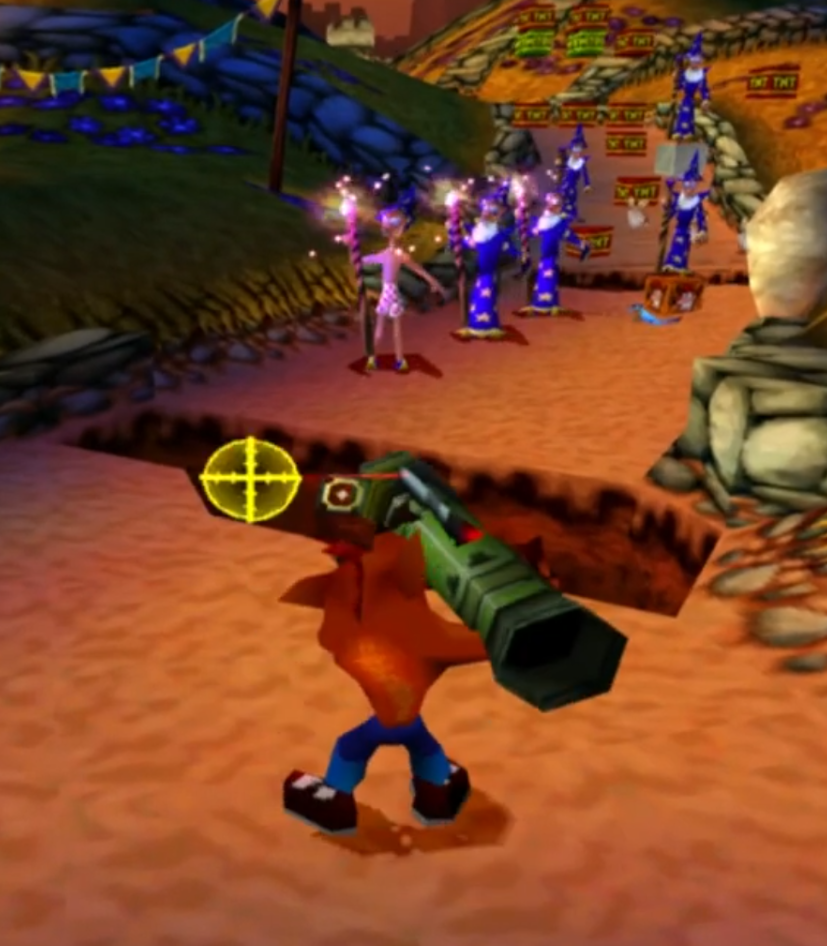
The wizards in Crash Warped medieval levels. If you played the PS1 PAL versions, you probably share my complaint. The N.Sane trilogy works the same way as other versions of the game, but the PAL version was best. As they are, the wizards are another lab assistant that die in one hit. But in the PAL version they had two hit points. Your first spin attack would knock their robes off for hilarious results. The second would finish them off. You could body slam them to defeat them in one hit, which added a layer of tactics. I don’t know why they chose to use the worse option.